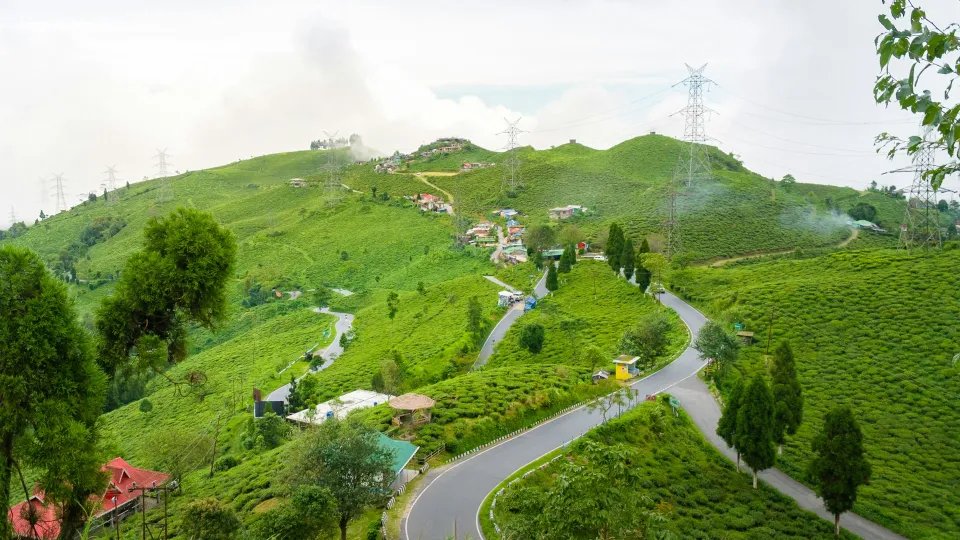

Sikkim is a good place to resist the urge to rush. A route with fewer hotel changes can create more time for mountain views, local exploration and the simple pleasure of a quiet morning. The most useful starting point is not a list of every destination you have seen online, but a clear idea of how much travelling your group wants to do each day.
Gangtok and Pelling provide a helpful framework for a first planning conversation. They do not have to become equal halves of every holiday, and a short visit may work better with one main base. This guide looks at pacing, accommodation and practical questions to ask before committing to a mountain itinerary.
Begin with the complete arrival journey
Your holiday starts before you reach the first hotel. Consider the connection from your arrival airport or railway station, the time you expect to arrive and how the group will feel after travelling. Avoid treating the transfer into the hills as a small detail. It should influence the first day's programme and the choice of overnight base.
Ask for an easy arrival evening and confirm what happens if the incoming service is delayed. A meal and a comfortable check-in may be more useful than an additional stop. The same principle applies at the end of the holiday: choose a final overnight location that supports a practical departure rather than an unnecessarily pressured early-morning journey.
Give Gangtok a useful amount of time
A stay in Gangtok should reflect your interests rather than simply fill the first two nights of a standard package. Some travellers want to explore at a leisurely pace, while others use it as a base for arranged outings. Explain which balance appeals to you and ask how much time is genuinely free after the included programme.
Location can strongly affect the stay. Check how the hotel connects with the areas where you want to spend your evenings, whether a vehicle reaches the entrance and whether steps are involved. A property described as quiet or scenic may be ideal for one traveller and inconvenient for another. Clear preferences make a more reliable brief than a star rating alone.
Decide whether Pelling adds the right contrast
Pelling may suit travellers who want a change of setting and a slower second base. Before adding it, compare the transfer day with the number of nights you can give the stay. One rushed night can offer less than an extra full day at your main base. An additional destination is worthwhile when it changes the experience, not only the itinerary headline.
Ask what the proposed stay is designed around: local outings, views, relaxed hotel time or a mixture. Choose accommodation accordingly. If the hope is to enjoy the setting, a little unstructured time matters. Do not book a scenic location and then arrange a programme that takes you away from it from breakfast until late evening every day.
Keep ambitious extensions separate
More remote or higher-altitude outings need their own planning discussion. Do not assume they can be added casually to a standard short itinerary. Access, traveller documentation and local conditions may influence what can be arranged. Ask the responsible operator to check the current requirements for your specific group and dates before describing anything as confirmed.
If a particular outing is your main reason for travelling, explain that early and discuss alternatives. A flexible plan should still feel worthwhile if access changes. Avoid designing the whole holiday around one weather-dependent view or one excursion with uncertain operation. A balanced route gives you several enjoyable reasons to travel rather than a single fragile expectation.
Plan road days around people
Ask which transfer is likely to be the most demanding and how breaks will be handled. A map estimate is not a promise about a mountain journey. Think about the needs of children, older travellers and anyone who prefers shorter road days. These considerations should shape the route before hotels are selected, not appear later as exceptions to a fixed programme.
On a transfer day, select a small number of meaningful stops rather than a string of quick photographs. Arriving with energy to enjoy the evening can be more valuable than reaching the hotel late after an overloaded day. Leave a lighter morning after a particularly long journey so the holiday has a comfortable rhythm instead of repeated early starts.
Choose rooms with practical details in mind
Confirm the exact category, bedding and meal basis. If a mountain-facing room is important, ask whether that specific feature is included rather than inferred from the main property image. Check access between the room, restaurant and vehicle pickup point if steps would be difficult. Traditional layouts and hillside settings can vary considerably.
Families should discuss extra beds and meal preferences before the booking is confirmed. Travellers who want quiet evenings may value a comfortable common area or a suitable restaurant more than proximity to a busy centre. Share these everyday details with the planner; they often determine whether a stay feels right more than a broad accommodation label does.
Compare the full package, not just the total
Line up the number of nights, overnight bases, room categories and transport sectors when comparing quotations. Ask which outings are included and which depend on a separate arrangement. Check how changes to access or local operation would be handled. A useful quotation makes the boundaries of the service clear instead of relying on general phrases such as “complete sightseeing”.
If you need to adjust the budget, discuss the route and hotel changes together. A simpler circuit can be more enjoyable than a busy one built around less convenient accommodation. Decide where comfort matters most: perhaps fewer driving days, a better room at the main base or an extra night to avoid rushing. Good planning makes those tradeoffs explicit.
Share a clear Sikkim holiday brief
Tell On Travel your arrival point, available nights, group size and preferred daily pace. Mention the experiences you most want and which parts of the route you are happy to keep flexible. Ask for the final itinerary to distinguish confirmed arrangements from proposed optional outings. Review availability, pricing and terms before making a decision.
For official destination background, visit Incredible India: Sikkim. Confirm current operational and documentation requirements with the appropriate authorities and service providers for your itinerary. This guide is an editorial planning aid and does not guarantee mountain views, road access or the operation of a particular excursion.
Plan Your Trip with On Travel
Ready to go? These itineraries cover the places in this guide and can be customised to your dates and budget:
- Sikkim Explorer – Gangtok & Pelling, 5 Nights / 6 Days
- Gangtok & Pelling – Sikkim, 4 Nights / 5 Days
- Gangtok & Darjeeling Heritage Tour – 4 Nights / 5 Days
- Darjeeling, Gangtok & Lachung – 5 Nights / 6 Days
Browse all Sikkim tour packages.
Related reading: Sikkim Trip Cost · How to Reach Sikkim · Sikkim Food Guide
Make the journey your own.
Explore itineraries inspired by the places in this guide.
Explore tour packages